Magnolia: Before & After

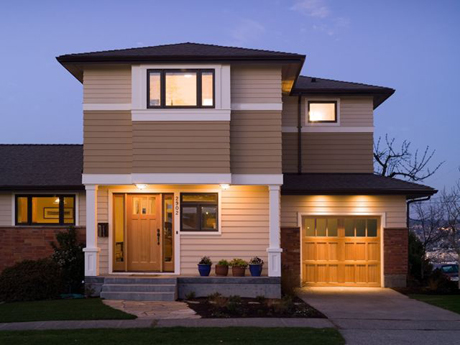
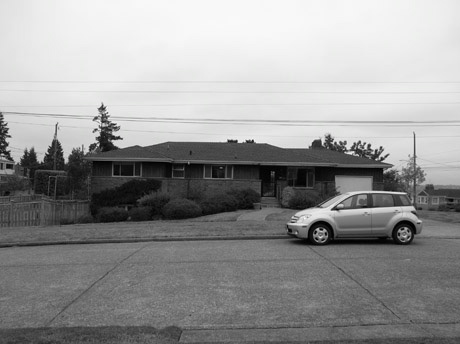
CHALLENGE  Add a second story with a master suite, bedroom, and bathroom over a 50's ramber.

SOLUTION  Prairie style proportions were used as a complement to the existing roof slope and overhangs, reducing the perception of height from the curb.  The addition was designed to create a front entry foyer on the main level where the new stairs are housed.  The second story also creates a welcoming, covered porch below.

'AFTER' PHOTOGRAPHY  © Dale Lang, 2008

Click here for more photos. 

The Secret to Picking the Perfect Paint Color

For many homeowners, picking the perfect paint color is a daunting task - prone to error, causing arguments, piling up receipts for samples or do-overs, and sometimes resulting in the decision to "just give up and paint it white". 

This is why I include paint color selection as a part of my architectural services. Having done this many times before, I make it easy and fun for my clients.

I use a the Benjamin Moore professional sample kit that includes large sheets of individual colors. If you don't have a professional to work with who can supply you with these, you may want to purchase the Benjamin Moore Fan Decks and then 

Here are some things to remember when selecting paint color:

A lot of men are color blind.  One of every ten men have some form of color blindness, while women are rarely affected. There are different severities and types of color-blindness. The most common type is the inability to distinguish red and green. This can be very challenging when looking at various shades of paint colors, as often the only difference between two colors will be the amount of red or green undertone.

All whites are not the same.  If you hold a fan of "whites" at arm's length, you would think they were colors like blue, pink, grey, or yellow. Yet, each of them are considered "white". I have heard the following statements, each of which is a clue that my clients need help, whether they realize it or not: 

  • "The contractor said he has a white that they used before, so we'll just use that."

  • "I just want white."

  • "We don't want any color, just an off-white."

  • "My mother says we should use antique white."

Benjamin Moore Off White Collection Fan Deck (click here to order from amazon)

Benjamin Moore Off White Collection Fan Deck (click here to order from amazon)

Complex colors change in different light. Many of the popular brands of paints have a complex color base. This makes the color very rich, whether light or dark. It also affects the color's appearance in different types of light. When you select colors, you should look at them in the type and intensity of light they will be seen in. DO NOT pick your paint colors on the floor of a fluorescent-lit showroom. 

The trickiest colors are green, khaki, and grey.  In my experience, the colors that appear the most different according to the quality and type of light are green, khaki (or camel) and grey. When I select one of these colors, I pull as many samples out of the oversize fan as I can find and pin them all up, either in the intended location or in the closest facsimile of the environment. I look at them several times throughout the day as the light changes, and remove any chip that begins to take on the appearance of another color. Green will tend to shift to brown. Khaki will tend to shift toward either purple or green. Grey will tend to shift to purple or blue.

Be careful with luminous colors.  If you adore "happy colors," remember that a color can be bright without being luminous. I once had a client who wanted a bright green bedroom, the color of the flesh of a lime. The color she chose was very luminous - meaning that it had a "glow." As a small chip, it was very appealing. But, when the whole room was painted, the color bounced off every wall, making the room so intense that the painters could only be in there for a short period of time before having to step outside to allow their eyes to adjust back to normal. (That room was immediately repainted a soft yellow.)

Color looks more intense on ceilings.  A paint chip with a hint of color will take on the appearance of a strong color when painted on a ceiling. 

The blue on this ceiling is actually a white with the slightest hint of blue hue that makes it look blue next to the creamy white trim.

The blue on this ceiling is actually a white with the slightest hint of blue hue that makes it look blue next to the creamy white trim.

Exterior house colors always look lighter than expected.  Selecting exterior house colors is one of the most challenging tasks. Nearly everyone who has chosen their own exterior paint will tell you they wish they'd gone darker. 

The sun is an incredibly powerful light source, even in the Pacific Northwest, and it affects the appearance of color dramatically. In fact, exterior paint always looks significantly lighter than the swatch once on your house. When you are choosing exterior colors, you should be looking at the darkest colors in the range. If you there is a house in your neighborhood you like, it is well worth knocking on the door to ask what color they used or to ask permission to bring your paint fan with you to compare swatches with their house. 

Consider the items that will go in the room.  Does the furniture have a red or green undertone? Are there things in the room that will contrast too much with the color? Is there something that you want to use as a focal point against the color such as artwork or antiques? Are there things on the ceiling that you don't want to draw attention to? (A color on the bathroom ceiling might sound like a fun idea, but remember that the exhaust fan, ceiling lights, etc. will be more noticeable than they would against a soft white.) 

Avoid trendy colors.  The retailers have a knack for rotating color trends, and today's beautiful green will soon be dated. The exception to this rule is choosing a color that is currently "trendy" but is one that you have ALWAYS loved. If you have loved it your entire life, you probably always will. If it is a new color that you are enjoying, have fun with your towels, bedcovers, or rugs. It is easier to rotate those when you become sick of the color than it is to repaint the room. 

Question the accent wall idea. My theory is that if you want a color but only on one wall, you probably aren't convinced that you like the color - or that you will like it for very long. Here is another opportunity for tablecloths, rugs, towels, etc. to take on that role. A true accent wall uses a contrasting or more saturated color to emphasize the architectural features of a space, not to showcase a fad.

Ask for help. I bring every Benjamin Moore and Sherwin Williams color created into my client's homes, sparing them the confusion at the paint counter. Rather than looking at tiny strips of five or six shades, we look larger swatches of individual colors. My paint kit is organized by the amount of undertone in each color, so it is easy to predict which colors will tend toward red, green, blue, or purple, based upon where the color is located within the stack of each color. I leave these swatches with my clients and order replacements for my kit.

Benjamin Moore Paint Color Sheets

Benjamin Moore Paint Color Sheets

If you don't have access to a professional who uses this kit, you will want to order fan decks so that you have lots of options to view in your home.

Test it out.  After my clients have had some time to look at the color swatches in various lighting over a few days, we select a few to mock-up on the wall. We don't use the little paint pots or pouches unless they are the exact brand AND sheen we intend to use, since both of these factors affect the color's appearance. We normally have mock-ups painted in 12"x12" or 24"x24" squares, in both the brightest and darkest spots of the room. 

If you'd rather not put the samples directly on your wall, you can paint the samples onto large pieces of foam core to help you visualize.  

Join the conversation. Have you used these tips to select the perfect paint color for you space? Comment to tell us about your challenge and what color you ended up using. 

Disclaimer: Some of the links in this article are affiliate links, meaning, at no additional cost to you, I will earn from qualifying purchases as an Amazon Associate if you click through and make a purchase.  All opinions are my own.


10 Rules of Thumb for Remodeling

As an architect who specializes in major remodels of older homes in Seattle, I often meet potential clients who ask the same questions:  Should we add a second story? Should we build an addition into our backyard? Should we tear down and start over? Or, should we fix this and flip it?

Each house and owner is unique, but there are some basic rules of thumb for making this important decision.

Rule of Thumb #1: The Big Picture
If you are uncertain about living in this house for at least 5-7 years after the major remodel is completed, then your efforts should focus on wide market appeal instead of what is uniquely important to your family’s lifestyle. The concept of owning the same home for 30 years and having the same job, or career for that matter, is a thing of the past. Some project types have very high, immediate return on investment (ROI) ratios, such as kitchen and bathroom remodels. According to Remodeling Magazine's "Cost vs. Value Report, 2008-09", a mid-upscale kitchen remodel in the Pacific Northwest averages between $62,997 and $119,361 Construction Cost with a 81.9%-87.3% ROI, and the same quality bathroom remodel in that region averages between $18,452 and $58,317 with a 79.5%-86.7% ROI.

Rule of Thumb #2: “Location, Location, Location"
Counting on your neighborhood to “transition” in 5-7 years is a risky move and should be considered a gamble. If your intent is to use the equity to move to a nicer neighborhood, then make choices that are appropriate to this house in thisneighborhood. Save the splurges for the house that you intend to keep in a neighborhood that is certain to support the investment.

Rule of Thumb #3: If it’s broken, fix it.
I once interviewed with homeowners whose house was full of things that needed to be fixed, including an unfinished basement remodel. The house was already a 4 bedroom, 2 bathroom house with a 1-car garage; they were contemplating a second-story addition to include 3 more bedrooms and 2 more baths. When complete, their house would have been the biggest on the block, and their resources would also have been completely exhausted.

Sometimes fixing the space you already own has a greater potential return on investment than trying to outweigh what is old and broken with new square footage.

Rule of Thumb #4: Consider leaving it alone.
Major remodels should result in major changes. Unless this is your last home, don’t spend money changing all the cabinetry in the house simply because you prefer maple over walnut (or vice versa). After all, you bought the house with those cabinets in it, and the next person who shares your tastes will probably still buy the house…as long as they believe the house is a good value.

Rule of Thumb #5: The more phases, the more the project’s cost.
Remodeling in phases costs more. It is always less expensive to have skilled labor come once to your house to do all of the work rather than to have them come three times to complete a third of the work each time. This is true even without considering the inflated costs of labor and materials. Homeowners are often surprised to find out that the second phase of work may cost as much as the projected total cost only two years ago for all phases. Planning to complete work in phases should only be considered if you either a) intend to stay in the house long enough to undertake all of the phases of work or b) execute the phases which result in the greatest return on investmentfirst.

Rule of Thumb #6: Adding a second story = whole-house remodel.
The prime candidates for second story additions are homes in older, dense, and highly desirable neighborhoods. Because these homes are also older, they usually need upgraded plumbing (often including new water and sewer mains), wiring, windows (repair if not replacement), and mechanical systems. They often have significant deferred maintenance items, leaving them in need of exterior (and sometimes interior) stripping and re-painting, re-roofing, rot repair, etc. Not very many homeowners are willing to make such a major investment and still park on a cracked driveway or have a house with a mismatched roof. All of these items add up to more than you’d imagine for the amount of square footage you plan to add.

Depending on your local building department’s requirements, a major remodel may require that the entire house be brought up to current building code. Different jurisdictions have different definitions of “major remodel”, either based on a dollar amount threshold or a ratio of the current value of the house to the Construction Cost. It isn't safe to assume that because you don’t intend to remodel a portion of the existing house that you won't be required to.

Rule of Thumb #7: Consider the yard as another room to remodel.
If your addition creates a strange roof shape, difficult drainage condition, or restricts visual or physical access to the yard, proceed with caution…or not at all. The return on investment for an extra room may be more than outweighed by the loss of the relationship, or potential relationship, of indoors to outdoors.

 
The porch and landscaping make rooms for outdoor living.

 

Rule of Thumb #8: Crunch the numbers.
Add what the house would currently sell for, less what you owe, plus what you anticipate spending. Then, go shopping. If your house is currently worth $700K, you owe $350K, and you are contemplating a $600K major remodel, you should have a look at the housing inventory that is up to 120% of $1M (which is $700K-$350K+650K). You may be shocked to find that there is a home that already meets or exceeds your needs in that price range, or one that is much, much closer to the finish line.

We need “starter homes” in our close-to-downtown neighborhoods, and choosing to sell your home to someone who is just getting started is indeed a very “green” choice – not to mention much less stressful than undertaking a major remodel.

Rule of Thumb #9: Hire a talented Contractor, and get out of the way.
Most homeowners have full-time jobs and don’t have construction backgrounds. Despite your deepest wishes to keep an eye on things and to put in some sweat equity to save money, you shouldn’t expect to live in the house while it is under construction or use your own labor to reduce costs. If you are counting on either of those to make the project possible, you are probably taking on more than you should.

 
A good contractor makes the dream a reality.

Rule of Thumb #10: Hire an Architect (hopefully me).
As an architect who specializes in residential projects, I am able to help you do much more than just plan your ideal home. I ask the important questions and consider both the emotional and financial effects of the answers. The earlier you involve me in the decision-making process, the more you stand to gain - even as early as shopping for a home. I can help you compare the pros and cons of candidates, including the home you already own, to determine which one offers the greatest potential.