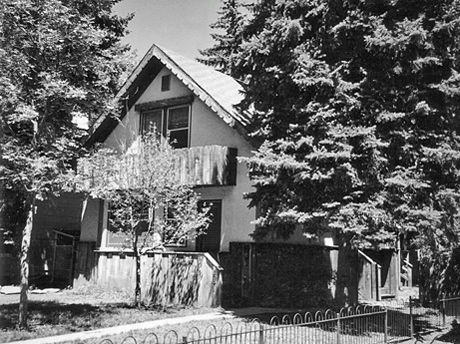
Tejon: Before & After

CHALLENGE  Restore the original charm of this home, which the previous owner had remodeled into a "Swiss chalet."  Located within a historic preservation overlay district, an additional design review prior was required prior to permit approval. 

SOLUTION  The siding was completely removed and replaced with cedar shingles, and new porch was designed to carefully recollect the original "stick-style" vocabulary.

'AFTER' PHOTOGRAPHY  Reprinted with permission of Cottage Living Magazine.  Photograph by Robbie Caponetto, © 2007

Click here for more photos. 


What Everyone Should Know About Windows

Whether you're building a new house, remodeling, or considering window replacement, windows are an important decision, with a large price tag. As an architect, I have seen dozens of brands of windows installed and have observed the lifespan and customer service factors as well. Here is what you need to know in order to make an informed decision about your window purchase.

Lowest to highest price (in general):
• aluminum
• vinyl
• wood - primed interior and exterior
• fiberglass
• wood - stain-grade interior with primed exterior
• metal clad exterior with wood interior

Pros:

Aluminum
• narrow frame
• modern look
• "no maintenance" finish

suggested brands- Marlin

Marlin aluminum windows

Vinyl
• "no maintenance"
• more energy efficient than aluminum
• inexpensive
suggested brands- Marvin, Pella, Andersen

Wood
• historic look
• material is insulative
• paintable
• less expensive than some fiberglass windows and all metal-clad windows
suggested brands- Marvin, Lindal, Cherry Creek, Pella, Andersen

Fiberglass
• paintable, or can leave exterior and interior unpainted for "no maintenance"
• some are insulated
• material is dimensionally stable, meaning that it doesn't expand and contract with temperature changes as much as vinyl
suggested brands- Marvin, Pella, Andersen

Metal Clad Wood
• "no maintenance" exterior
• option for primed or stain-ready interior
• finish weathers well, even in marine exposures
• return on investment (when compared to painted windows, the price gap is closed after only one re-paint)
• some brands are susceptible to fading of coating on exterior

suggested brands- Marvin, Loewen, Pella


Loewen metal-clad windows

Cons:

Aluminum
• not recommended for painting
• same color exterior and interior
• most brands do not meet current minimum energy code requirements in Washington
• some units are not "thermally broken" - meaning that the metal conducts heat and can contribute to condensation
• some brands/lines have not undergone technological advancement since the 60's and are still on the market
• some metals are incompatible with others, and this must be taken into account if you will have other metals in direct contact

Vinyl
• limited color choices - mostly white and putty
• not paintable
• same color interior and exterior
• material is not as dimensionally stable, meaning that it will expand and contract with temperature changes more than some other materials

Wood
• more maintenance - need to repaint every 5-7 years in the Pacific Northwest region
• stain-grade interiors and exteriors are more expensive
• energy code compliant units typically have vinyl tracks or seals, which are not visually desirable for some applications

Fiberglass
• same color inside and outside, unless you paint one or the other

Metal Clad Wood
 • higher price


Understanding the Technology
Some basic information about types of windows and doors can be found here:

Currently, the 2006 Washington State Energy Code (still in force by many jurisdictions) requires that windows have a U-value of 0.35 or better if following the prescriptive path of compliance, meaning that the percentage of windows is not limited as long as the U-value meets or exceeds the minimum requirement.

A window's U-Value is representative of the window's resistance to heat flow, and the lower the number the better the insulating value. This is the criteria that retailers highlight the most, but it is not a comprehensive evaluation of the window's performance. It is also important to know that different operations of windows will have different U-values. Although one manufacturer's fixed window may meet the minimum code-required U-value, it's operable units may not. This does not necessarily mean that you will not be able to use them, but it does make it more difficult to achieve and demonstrate compliance. More information about selecting energy efficient windows in Washington can be found here:

Efficient Windows Collaborative, "Fact Sheet: Selecting Energy Efficient Windows in Washington," Sept. 2007.

National Fenestration Rating Council, "Questions About Buying New Energy Efficient Windows?", Nov. 2002.

You should also be considering window's structural performance rating, particularly if your house is exposed to high wind speeds and/or driving rains. The structural performance rating is a measure of the amount of air pressure, or wind load, a window can resist before failing. Homes with significant exposure would benefit from a higher than minimum structural performance rating, as those windows are more resistant to wind-blown water intrusion.

The different structural classifications are defined and certified by the American Architectural Manufacturer's Association. To read more, visit www.aamanet.org and review their brochure.

Proper Installation is Vital

Consider your windows as important to your home's health as the condition of your roof. Windows should be installed by qualified contractors, able and willing to identify and remedy any rot and flashing issues. You should anticipate and budget funds beyond the quoted cost of the windows and simple installation to be able to correct any deficiencies that are discovered as well as replace interior trim and casings, repaint, and/or touch-up drywall.

"Replacement windows" are NOT the same as replacing windows with new units that have a nail flange and are properly flashed. You may be better off keeping your old windows and considering ways to reduce infiltration, rather than allowing "replacement windows" to be set into a bead of caulk which will be prone to failure.

What about the tax credit?

To find information about the federal tax credit for energy efficient windows, doors, and skylights, visit www.energystar.gov.

Tips for Getting the Best Survey the First Time

Permit-ready site plan, with surveyed information included

Permit-ready site plan, with surveyed information included

When, and how much?
For the majority of projects that involve a structural change, whether "up" or "out", a full survey by a licensed surveyor is a "must-have". In Seattle, the fee to have a property surveyed averages between $2,500 and $3,000 for a typical urban residential lot and up to $5,000 for larger or more complex lots, depending on factors such as the distance to nearest recorded monuments, the presence of environmentally critical areas (steep slope, known landslides, etc.), and the quantity and complexity of the existing improvements.

Since subsequent visits to record additional information are not included in the initial price, a list of information required by your local jurisdiction should be provided to your surveyor, to ensure that all it is acquired in a single visit.

Basic requirements
Here are a few of the checklists and standards for the city of Seattle:

SDCI Tip 103 - Site Plan Requirements

SDCI Tip 327A - Environmentally Critical Areas

Be sure to check the City of Seattle Department of Planning and Development for the most current version of these documents prior to use.

Similar information for other jurisdictions can be found by searching for "land use department" or "planning department" and the name of your city and/or county.

Be sure to also ask for...
In addition to this list, I always request the following additional information:

  • elevation of every corner 

  • elevation of finished floor at every door

  • elevation of every ridge

  • top elevation of every overhang

  • horizontal dimension from the outside edge of the overhang (or face of fascia) to the face of the foundation

  • diameter of trunk and species of all trees with trunks greater than 3" in diameter

  • locations of all impervious surfaces with type of material labeled (concrete, asphalt, crushed rock)

  • adjacent right of way (full width) 

  • neighboring structures within 20' of property line (If you are changing the front of your house, you may need to have the entire front of both adjacent houses surveyed in order to determine your setback by way of "front yard averaging.")

  • For properties where we may be building close to underground utilities, recorded locations of all existing underground utilities. The marking of underground utilities is usually done by a separate company, subcontracted by the surveyor prior to their visit to measure your property. This cost is not typically included in the surveyor's estimate, but is sometimes free and usually not more than a few hundred dollars. The underground utility locators can also mark depths of items - sometimes critical for locating new foundation walls and new sewer or stormwater connections, if requested. 

Avoid conflict.
Whether or not you anticipate problems, making changes to your home's appearance is something that the neighbors will be concerned about. For strategies to prevent or resolve conflict, see WHEN NEIGHBORS DISAPPROVE - 6 TIPS FOR SUCCESS.